
Design-Build vs Hiring Separate Contractors: Who Manages What?
Before you choose cabinets or tile, you're making a quieter decision that shapes everything else: who's in charge of the project? You can hire one company to design and build the whole thing, or you can hire a designer or architect first and then bid the construction out to contractors.
Both models can produce a beautiful kitchen or bath. They differ in who manages each step and who answers for the result when something goes wrong. This guide defines design-build and the traditional design-bid-build model, maps who handles what in each, addresses the common concerns about cost and creative control, and helps you decide which fits your project.
What Is Design-Build? What Is Design-Bid-Build?
Design-build means one company provides both the design and the construction under a single contract. The same team that draws your plans and helps you choose materials also builds the project.
Design-bid-build is the traditional approach. You hire a designer or architect to create plans, then take those plans to one or more contractors for bids, pick a contractor, and the contractor builds what was drawn. Design and construction are separate contracts with separate accountability.
A third variation is common in remodeling: hiring separate trades yourself, such as a cabinet supplier, a plumber, an electrician and a tile setter, and coordinating them on your own.
Who Manages What: A Side-by-Side Look
| Task | Design-build | Separate designer and contractor | Hiring trades yourself |
|---|---|---|---|
| Design and drawings | Design-build firm | Designer or architect | You, or a hired designer |
| Budget during design | Priced as you design | Estimated, then confirmed by bids | You gather prices trade by trade |
| Product selection and ordering | Firm coordinates | Split between designer and contractor | You |
| Scheduling trades | Firm | General contractor | You |
| Permits | Firm | Usually the contractor | You or each trade |
| When something goes wrong | One company is responsible | Designer and contractor may disagree on fault | You sort it out between trades |
| Your main contact | One team | Two or more | Everyone |
Comparing Accountability, Timeline, Budget and Communication
Accountability
In design-build, one company owns both the plan and the result, so there's no question about who fixes a problem. In design-bid-build, a gap between the drawings and what gets built can turn into a debate between the designer and the contractor, with you in the middle.
Timeline
Design-build lets planning, pricing and ordering overlap. Cabinets and long-lead items can be ordered as soon as selections are final, without waiting for a separate bid process. Design-bid-build adds a bidding step between design and construction, and changes discovered during bidding can send plans back for revisions.
Budget control
With design-build, the people pricing the job are in the room while you design, so you find out early if a choice pushes the budget too far and can adjust before anything is drawn in final form. With separate contracts, you may finish a design you love and then learn from the bids that it costs more than planned.
Communication
One team means one set of conversations. With separate firms, messages pass between the designer, the contractor and you, and details can get lost along the way.
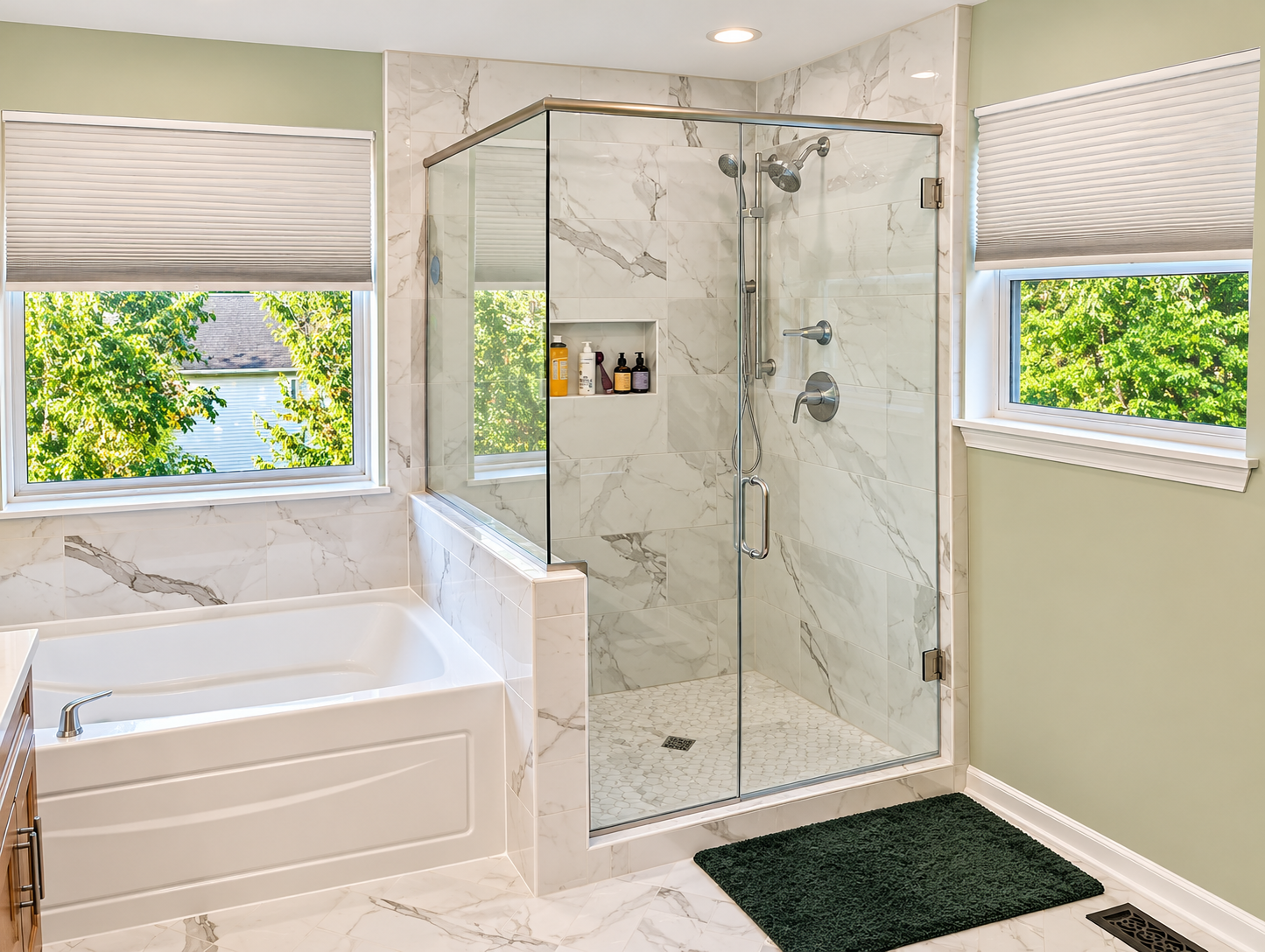
A primary bath like this one, with a frameless glass shower, a tub and two windows, involves plumbing, electrical, tile, glass and finish carpentry. Coordinating all of those trades is where a single point of contact earns its keep.
See how our team handles projects from first sketch to final walkthrough on our design and remodeling process page.
The Single-Point-of-Contact Advantage
For most homeowners, the biggest benefit of design-build isn't on paper. It's not having to be the project manager. You have one team to call with a question, one schedule to follow and one company responsible for getting it right.
At Kitchen & Bath Design Store, our designers create the plan and our in-house team handles every aspect of the remodel. We don't outsource critical steps. Before work begins, you get a clear, itemized proposal so you know what's included and what it costs.
Common Concerns About Design-Build
"Won't I pay more without competitive bids?"
It's a fair question. Competitive bidding can lower the construction price on paper, but the lowest bid often covers the least, and change orders after the fact can erase the savings. With design-build, pricing is built alongside the design and laid out in an itemized proposal you can review line by line. You can still compare that proposal with other firms before you commit; our kitchen remodeling budgeting guide helps you sanity-check the numbers.
"Will I lose creative control?"
No. In a good design-build firm, you approve the plans and every selection before anything is ordered. What changes is that the designer knows exactly how the project will be built, so ideas are checked for cost and buildability as you go rather than after the plans are done.
"Is the design as strong as an independent designer's?"
That depends on the firm, not the model. Ask to see a portfolio, look at completed projects similar to yours, and talk with the designer who will work on your project. You can start with our kitchen and bath portfolio and client reviews.
How to Choose the Right Model for Your Project
Design-build is usually the better fit when
- You're remodeling a kitchen or bathroom and want one team responsible from start to finish
- You'd rather not coordinate trades, deliveries and inspections yourself
- You want to know the cost while you're still making design decisions
- Your schedule matters, and you want ordering to start as soon as selections are final
Separate design and construction can make sense when
- You already have an architect you love, or the project is a large addition that needs full architectural drawings
- You want several contractors to bid the exact same set of plans
- You have the time and experience to manage the process yourself
Design-build projects with us start in our St. Charles showroom, where you can see cabinet lines, counters and hardware while you plan. Your designer can price options on the spot.
For the case for design-build in more depth, read why design-build remodeling delivers better results.

Frequently Asked Questions
What is the difference between design-build and a general contractor?
A design-build firm handles both the design and the construction under one contract. With a general contractor in the traditional model, you hire a separate designer or architect first, and the contractor builds from those plans.
Is design-build more expensive?
Not necessarily. Design-build prices the project while you design, which helps avoid surprises later. Competitive bids can look cheaper on paper, but lower bids often cover less and change orders can add up.
Do I lose control over design with design-build?
No. You approve the plans and every selection. The difference is that cost and buildability are checked as you design instead of after the plans are finished.
When should I hire separate contractors instead?
Separate design and construction can make sense if you already have an architect, the project is a large addition needing full architectural plans, or you want several contractors to bid the same drawings and are comfortable managing the process.
Talk With a Design-Build Team in St. Charles
Kitchen & Bath Design Store has been designing and building kitchens and baths in the Fox Valley since 1988. Schedule a consultation, visit our showroom, or call (630) 214-9775 to talk about your project.