
Bathroom Always Foggy? How to Fix Ventilation and Stop Mold
You step out of the shower and the mirror is gone. Ten minutes later it still hasn't cleared, the towels never quite dry, and there's a gray shadow creeping along the caulk line. A bathroom that stays foggy is telling you something: the moisture you make every morning has nowhere to go.
The good news is that most bathroom ventilation problems come down to a handful of fixable causes. Below we walk through why humidity builds up, how to tell whether your fan is too small or vented the wrong way, how to size a replacement, and the habits that keep mold from coming back.
Why Bathroom Humidity Builds Up (and What It Damages)
A hot shower puts a surprising amount of water vapor into a small room. When that warm, wet air touches cooler surfaces like the mirror, the window, an exterior wall or the ceiling below the attic, it condenses back into water. In Fox Valley winters, those surfaces get cold enough that condensation forms quickly and lingers.
If the air isn't pulled out fast enough, that moisture settles into the places you can't easily wipe dry:
- Grout and caulk joints , where mildew shows up first as dark spots or lines
- Painted ceilings and drywall , which blister, peel or stain
- Vanity cabinets and trim , where wood finishes swell or lift at the edges
- Wall and ceiling cavities , where hidden moisture can feed mold you never see until a remodel opens things up
Musty smells, peeling paint near the ceiling and a door that sticks every winter are all signs the room is staying damp longer than it should.
Is Your Fan Undersized or Vented Wrong? How to Check
Before you buy anything, figure out what your current fan is actually doing. A few quick checks will tell you a lot.
The tissue test
Turn the fan on and hold a single square of toilet tissue up to the grille. A working fan should hold it against the cover. If the tissue barely moves or falls away, the fan is either too weak, clogged with dust, or fighting a duct problem.
Read the label
Pop the grille off and look for the rating sticker on the housing. You're looking for two numbers: CFM (cubic feet per minute, the amount of air it moves) and sones (how loud it is). Many older builder-grade fans are both underpowered and loud, which means people turn them off early or skip them entirely.
Follow the duct
A fan is only as good as the path the air takes. Common problems we find in older homes include:
- Ducts that dump moist air into the attic instead of running all the way outside
- Long runs of crushed or kinked flexible duct
- Too many bends between the fan and the exterior cap
- An exterior damper stuck shut, or a cap blocked by a bird nest
Moist air vented into an attic doesn't disappear. In cold weather it condenses on the roof sheathing and insulation, which trades a bathroom problem for an attic problem. If you see frost or staining around the fan housing from the attic side, the duct needs attention.
If the fan checks out but the room still fogs up, look at timing. A fan that runs only while you shower can't clear the moisture that keeps evaporating off wet walls, towels and the floor afterward.
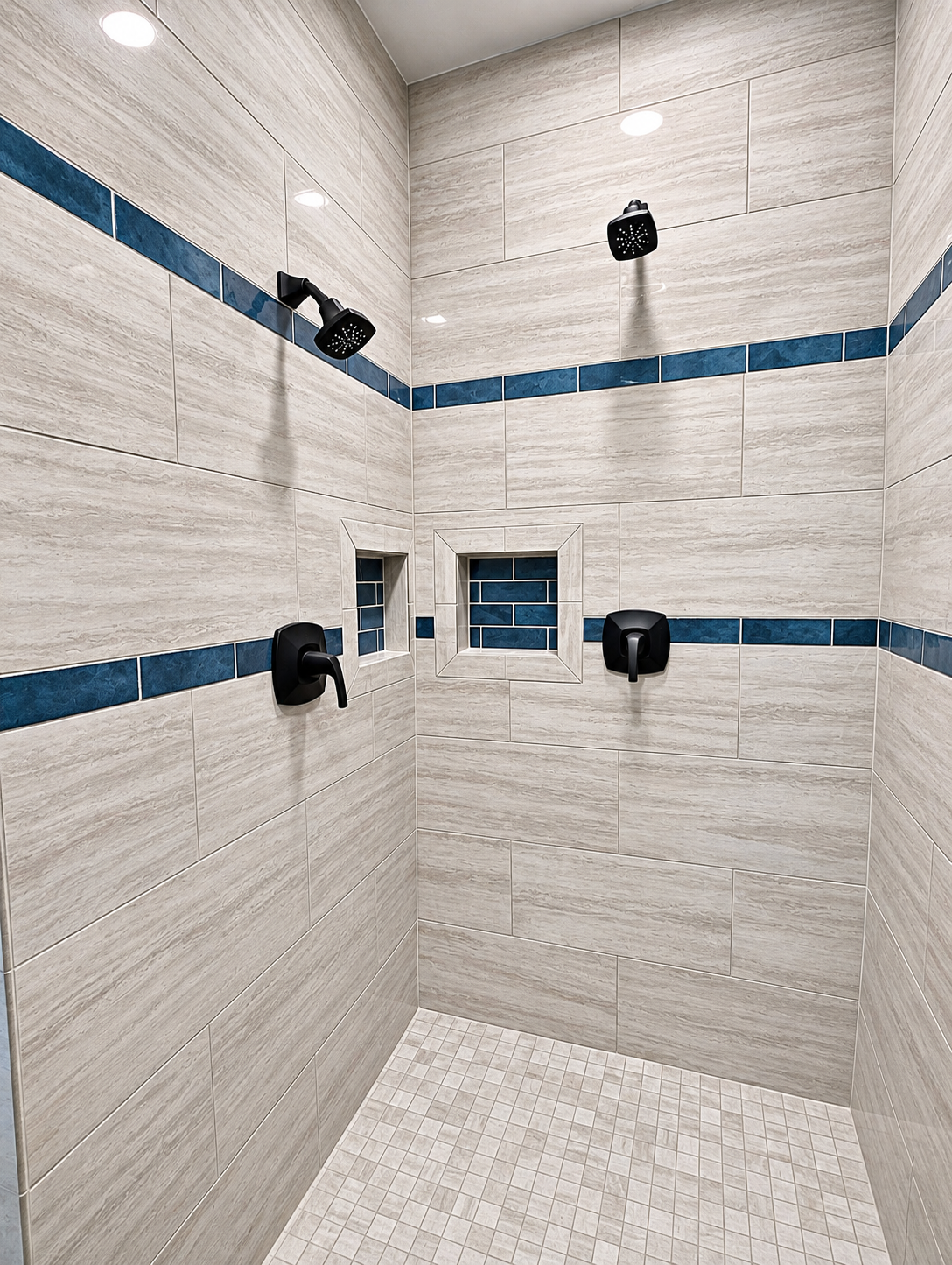
This is also why fan placement matters so much in larger primary baths with separate shower and tub areas, like many of the bathroom remodels we complete in St. Charles.
How to Size the Right Bathroom Fan (CFM)
The Home Ventilating Institute (HVI), the industry group that certifies fan performance, publishes a simple sizing rule for most bathrooms.
Bathrooms up to 100 square feet
Plan on 1 CFM per square foot of floor area, with a 50 CFM minimum for any bathroom. Multiply length by width to get the square footage. An 8 x 10 bathroom is 80 square feet, so it needs at least an 80 CFM fan. A 5 x 8 powder room still gets a 50 CFM fan because of the minimum.
Bathrooms over 100 square feet
For bigger rooms, HVI recommends adding up the fixtures instead:
| Fixture | Recommended CFM |
|---|---|
| Toilet | 50 |
| Shower | 50 |
| Bathtub | 50 |
| Jetted tub | 100 |
A primary bath with a toilet, a separate shower and a soaking tub adds up to 150 CFM. That can come from one larger fan, or from smaller fans placed over the shower and in the toilet room, which often clears steam faster because each fan sits right where the moisture starts.
Adjust for the real world
CFM ratings assume a reasonably short, smooth duct. Long runs, extra elbows and flexible duct all reduce what the fan delivers. Fine Homebuilding notes that insulated flex duct should be counted as about 1.5 times its actual length when you figure the equivalent run. Tall or vaulted ceilings also add volume. When in doubt, step up a size and pair it with a speed control or humidity sensor.
Placement, Ducting and Humidity-Sensing Options
Getting the CFM right is half the job. Where the fan sits and how the air leaves the house matter just as much.
Fan placement
- Mount the fan in the ceiling near or above the shower, not on the far side of the room by the door
- In a room with a separate toilet compartment or a large walk-in shower, consider a second fan or a fan with two pickup points
- If the fan sits inside the shower area, use one rated for wet locations on a GFCI-protected circuit
Ducting that actually works
- Run the duct all the way to an exterior wall or roof cap. Code requires bath exhaust to end outside, not in the attic
- Use rigid or semi-rigid duct where you can, keep it as short and straight as possible, and match the duct size to the fan outlet
- Insulate the duct where it passes through an unheated attic so moist air doesn't condense inside it
- Seal joints with foil tape, not cloth duct tape
Controls that remove the guesswork
Most foggy bathrooms have a fan that gets shut off too soon. A few control upgrades fix that without anyone having to remember:
- Timer switches keep the fan running for a set period after you leave
- Humidity-sensing fans turn on automatically when moisture rises and shut off once the room dries
- Quiet fans, rated around 1.0 sone or less, are easy to leave running because you barely hear them
A window helps on mild days, but it can't replace a fan. In January nobody in St. Charles is cracking the bathroom window after a shower, and an open window doesn't pull air the way a fan does.
When we plan a remodel, the fan, duct route and controls are part of the design from day one, which is far easier than retrofitting later. You can read more about why in our post on the hidden value of bathroom ventilation.

How to Stop Bathroom Mold Before It Starts
Once ventilation is fixed, a few habits keep the room dry and the grout clean:
- Run the fan during every shower and for a good while after, or let a timer or humidity sensor handle it
- Squeegee glass and tile walls after showering, which takes less than a minute
- Hang towels and bath mats where they can dry fully, not bunched on a hook
- Leave the shower door or curtain open afterward so the enclosure can air out
- Clean the fan grille a couple of times a year, since dust buildup quietly cuts airflow
- Re-caulk failing joints around the tub, shower and vanity before water gets behind them
If mold keeps returning to the same spot after cleaning, or you notice soft drywall or a persistent musty smell, the moisture may already be inside the wall. That's a good time to have a professional look before it spreads.
When a Fan Upgrade Becomes a Bathroom Remodel
Sometimes the fan is the whole fix. Other times, a foggy bathroom is one symptom of a room that also has a cramped layout, tired tile, a leaking shower or a vanity that's swelling at the base. If you're already planning updates, fold ventilation into the plan so the new tile, paint and cabinetry are protected from day one. Our guide to what affects bathroom remodel costs can help you scope the project, and our bathroom project gallery shows what a finished room can look like.
Frequently Asked Questions
Why does my bathroom mirror stay foggy even with the fan on?
The fan is likely undersized for the room, losing airflow through a long or crushed duct, or being shut off too soon. Try the tissue test at the grille, check the CFM rating on the housing, and make sure the duct actually reaches the outside of the house.
How many CFM do I need for my bathroom fan?
For bathrooms up to 100 square feet, the Home Ventilating Institute recommends 1 CFM per square foot with a 50 CFM minimum. For larger bathrooms, add 50 CFM each for the toilet, shower and tub, and 100 CFM for a jetted tub.
Can a bathroom fan vent into the attic?
No. Bath exhaust should run through a duct to an exterior wall or roof cap. Venting into the attic lets moist air condense on the roof sheathing and insulation, which can lead to mold and damage there.
How long should I run the bathroom fan after a shower?
Keep it running until the mirror and walls are clear, not just until you leave the room. A timer switch or humidity-sensing fan is the easiest way to make sure it runs long enough every time.
Get a Bathroom That Clears Up Fast
Kitchen & Bath Design Store has been designing and building bathrooms for homeowners across the Fox Valley since 1988, and proper ventilation is part of every bath we plan. If your bathroom stays foggy or you're ready for a full update, schedule a consultation with our design team or call us at (630) 214-9775. You're also welcome to visit our St. Charles showroom to see fixtures and finishes in person.