
Walk-In Shower vs Wet Room: Which Is Right for Your Bathroom?
The shower is often the reason people start a bathroom remodel. Maybe the tub-shower combo feels cramped, or you're tired of stepping over a high tub wall, or you've seen an open, glass-walled shower and can't stop thinking about it.
Three types of showers cover most bathrooms: the classic tub-shower, the walk-in shower and the wet room. Each suits a different household and a different budget. Here's how to choose a shower by comparing space, cost, accessibility, cleaning, resale and the waterproofing each one needs.
The Three Options and Who Each One Suits
Tub-shower combination
A bathtub with a showerhead and a curtain or glass door. It's the most space-efficient way to get both bathing and showering in one footprint, which is why it's standard in hall and kids' baths.
Best for: families with young children, secondary bathrooms, and homes where this is the only tub.
Walk-in shower
A dedicated shower with no tub, usually enclosed by glass panels and a door or open on one end. It can have a low curb or be built curbless. Walk-in showers are the most common upgrade in primary bath remodels.
Best for: primary bathrooms, people who rarely use a tub, and anyone who wants a larger, more comfortable shower.
Wet room
A bathroom where the shower isn't a separate enclosure at all. The whole floor is waterproofed and sloped to a drain, so the shower area flows into the rest of the room, often with a single glass panel to limit splash.
Best for: fully barrier-free designs, a strong modern look, and households planning for wheelchair access.
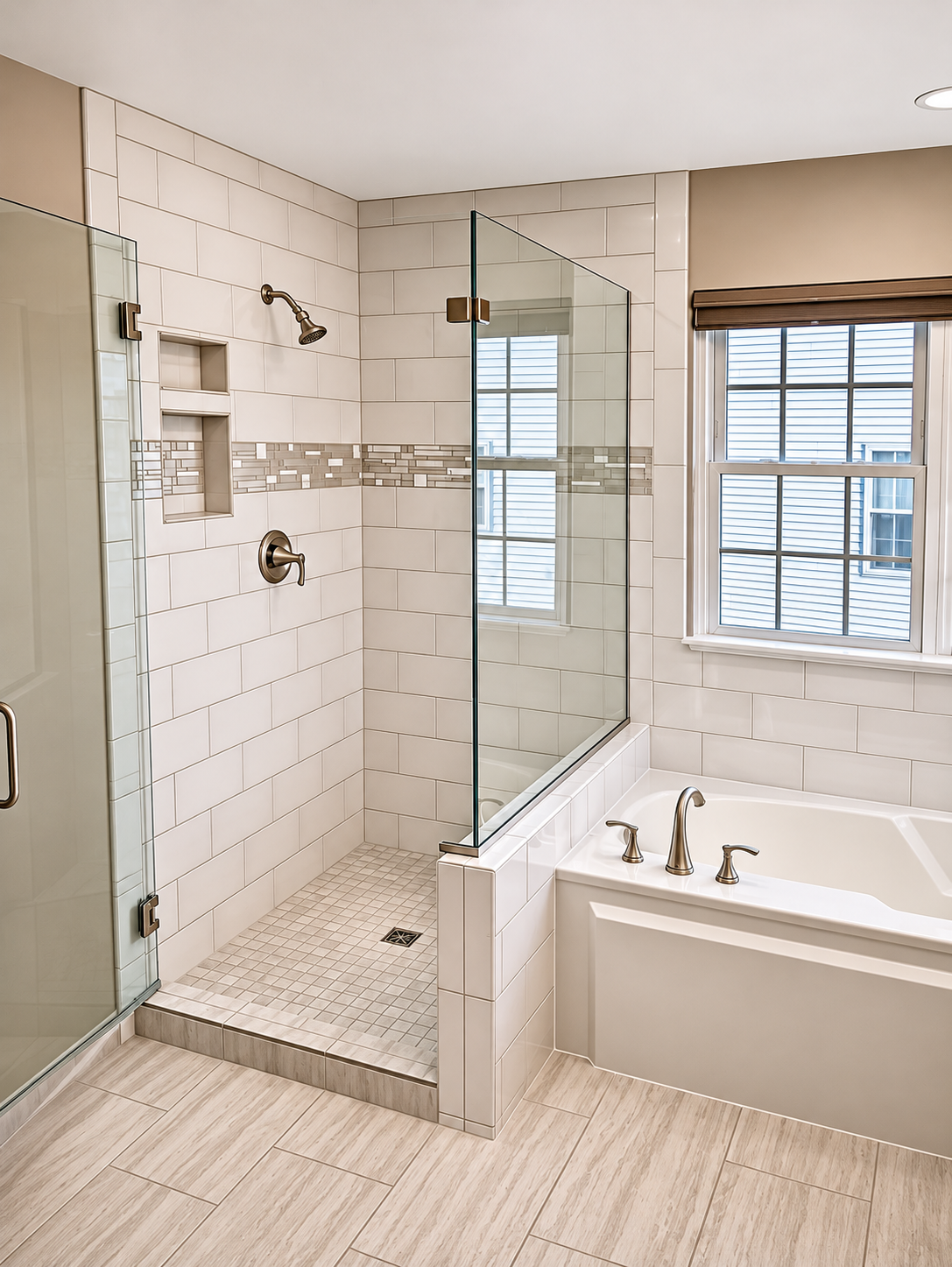
Many primary bath remodels end up with both: a generous walk-in shower and a separate soaking tub, like this Bartlett project. If you have the floor space, it's a layout that suits nearly everyone.
Browse more finished rooms in our bathroom project gallery.
Walk-In Shower vs Tub-Shower vs Wet Room: Side by Side
| Tub-shower | Walk-in shower | Wet room | |
|---|---|---|---|
| Space needed | Smallest; fits a standard 5' alcove | Moderate; needs room for a comfortable shower area | Works in small rooms, but the whole room gets wet |
| Relative cost | Lowest | Moderate to high | Highest, because of whole-room waterproofing |
| Accessibility | Hardest; requires stepping over the tub wall | Good with a low curb; excellent if curbless | Excellent; fully level floor |
| Cleaning | Tub and surround | Glass and tile; a squeegee helps | Everything near the shower gets splashed |
| Bathing option | Yes | No | Only with a freestanding tub in the wet zone |
Space
A tub-shower uses space most efficiently. A walk-in shower needs enough room to feel comfortable, and glass panels help it look larger. A wet room can make a small bath feel open, but towels, toilet paper and anything else in the room need to be placed carefully to stay dry.
Cost
Wet rooms generally cost the most because the entire floor and the lower walls need a continuous waterproofing system, not just the shower area. Walk-in showers cost more than a basic tub-shower, especially with custom tile and frameless glass, but they keep waterproofing focused on the shower zone. Our post on what drives bathroom remodel costs goes into the factors in more detail.
Accessibility
If anyone in your home has trouble stepping over a tub wall, or you plan to stay in the house as you get older, a curbless walk-in shower or a wet room is worth serious thought. Both let you roll or walk in without a step.
Cleaning
Glass enclosures need regular wiping to avoid water spots, and every option needs a properly sized exhaust fan; our post on bathroom ventilation explains why. Wet rooms have fewer corners and no tracks, but water can travel farther across the floor, so more of the room needs a quick wipe after showering.
Resale and Family-Use Considerations
Think about the whole house, not just the one bathroom:
- Keep at least one tub somewhere. If this is the only bathroom with a tub, removing it can narrow your pool of buyers, especially families with small children.
- Primary baths are different. Many homeowners happily trade the primary bath tub for a large walk-in shower, as long as a tub exists in another bathroom.
- Wet rooms are a strong choice for the right buyer but less familiar in Midwest homes, so they make most sense when you plan to stay or need the accessibility.
- Kids' baths almost always work best with a tub-shower for bath time.
Waterproofing Basics for Each Shower Type
Waterproofing is the part of a shower you never see, and it's what decides whether the bathroom lasts. Each type handles water differently.
Tub-shower
The tub catches the water, and the walls above it need a proper waterproof backer and membrane behind the tile, not just drywall and grout. Grout alone is not waterproof.
Walk-in shower
The shower floor and walls need a continuous waterproofing system tied into the drain. The International Plumbing Code calls for shower floors to slope about 1/4 inch per foot toward the drain. A curbless walk-in also needs the floor recessed so the shower can slope without a step at the entry.
Wet room
The membrane covers the entire floor and runs up the walls, so the whole room acts like one large shower pan. The floor slopes to a drain, often a linear drain that allows a single, gentle slope and larger tiles. Good ventilation matters even more here, which our guide to bathroom remodeling in St. Charles builds into every design.
This zero-threshold shower shows what a well-built walk-in can look like: herringbone tile, a corner bench and a recessed niche, with no curb to step over at the entry.
Getting a floor like this right depends on planning the slope, drain location and waterproofing before any tile goes down.

A Decision Framework by Household Need
- Young kids, or this is the only tub: tub-shower.
- Primary bath, adults who prefer showers: walk-in shower, with a low curb or curbless entry.
- Planning to age in place: curbless walk-in shower with a bench, grab bars and a handheld shower.
- Wheelchair user or fully barrier-free goal: wet room or a large curbless walk-in.
- Small bathroom, want it to feel bigger: walk-in shower with frameless glass, or a compact wet room if splash can be managed.
- Tight budget: tub-shower or a walk-in with a prefabricated base.
Frequently Asked Questions
What is the difference between a walk-in shower and a wet room?
A walk-in shower is a defined shower area, usually with glass panels, where only the shower zone is waterproofed. In a wet room, the entire floor and lower walls are waterproofed and sloped to a drain, so the shower is open to the rest of the room.
Is a wet room more expensive than a walk-in shower?
Usually, yes. Waterproofing the whole room takes more material and labor than waterproofing a single shower area, and the floor often has to be recessed or rebuilt to create the slope.
Should I remove my bathtub for a walk-in shower?
In a primary bath it's a common and popular choice. If it's the only tub in the house, consider keeping one elsewhere, since many families with young children look for a tub when buying.
Are curbless showers good for aging in place?
Yes. A curbless shower removes the step at the entry, and pairing it with a bench, grab bars and a handheld shower makes it safer and easier to use at any age.
Design the Right Shower for Your Bathroom
Our designers will look at your space, your household and your budget and recommend the shower that fits. Schedule a consultation, see faucets and fixtures in our St. Charles showroom, or call (630) 214-9775.