
Sustainable Materials for Eco-Friendly Kitchen Remodels in St. Charles, IL
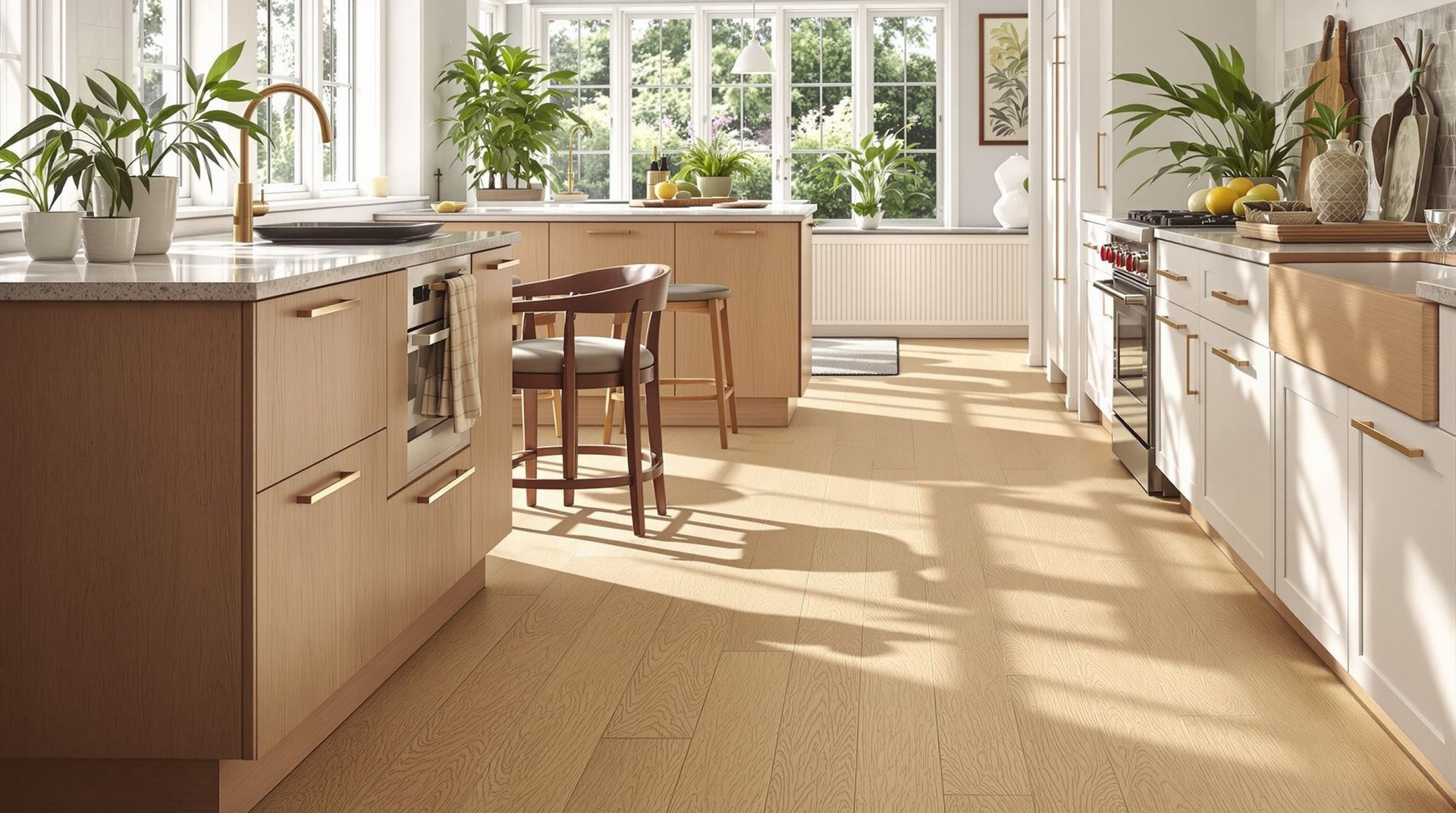
Remodeling a kitchen, whether you're thinking about a small refresh or exploring bigger kitchen remodeling ideas, usually starts with those little moments you notice at home. Maybe you spot worn cabinet doors while you’re making breakfast. Maybe your counters look a little too well-loved after years of school lunches and weeknight dinners. Whatever brought you here, you’re in good company.
A sustainable remodel doesn’t have to be complicated. You can make a real difference with simple choices, like switching to low-VOC finishes or picking a countertop that’s made with more thoughtful materials. Homes built in the 1980s through the early 2000s tend to benefit the most from these updates. The layouts still work well, but the finishes often show their age.
So, let’s break this down in a way that feels practical. We’ll walk through sustainable options step by step, with the goal of helping you make choices that fit your home, your routine, and the way you actually use your kitchen.
Understanding Sustainability in a Modern Kitchen Remodel
Before choosing materials, it helps to understand the basics of what makes something sustainable. Once these ideas click, the rest of the remodel becomes easier to plan.
What “Sustainable Materials” Really Mean
Sustainable materials come from thoughtful sourcing, cleaner manufacturing, and designs meant to last. This might mean:
- Wood harvested from responsibly managed forests
- Countertops made with recycled content
- Finishes with fewer chemical emissions
- Products that can be recycled or repurposed later
Low-VOC paints and finishes deserve a special mention. Traditional finishes can release strong odors and chemicals into the air, which linger long after installation. Low-VOC products help ease those concerns, making them especially helpful for families with allergies or pets.
How These Choices Fit St. Charles Homes
St. Charles homes built in past decades tend to feature open layouts, oak kitchen cabinets, and tile floors that were popular at the time. Sustainable materials fit right into these spaces, offering a fresh look without clashing with the home’s architecture.
For example, many homeowners choose responsibly sourced wood in warm tones to replace aging oak cabinets. Others opt for recycled-content countertops that pair beautifully with traditional layouts. These updates create a cleaner, more comfortable environment while keeping the home’s familiar charm.
Now that the foundation is set, it makes sense to start with one of the biggest features in any kitchen: the cabinetry.
Cabinetry Options That Support a Greener Home
Cabinetry sets the atmosphere of your kitchen and plays an important role in any kitchen remodeling project of your kitchen. Updating it with sustainable materials is one of the most impactful changes you can make.
FSC-Certified Wood and Why It Matters
FSC-certified wood comes from forests managed with long-term renewal in mind. For you, that means dependable quality and peace of mind. Many St. Charles homeowners love this option when replacing original kitchen cabinets that are showing signs of wear, stains, or loose hinges.
Low-VOC Paints and Finishes
Finishes affect the look, durability, and feel of your cabinets. Choosing low-VOC finishes reduces unwanted odors and chemicals during and after installation. This small switch makes a noticeable difference, especially in busy homes where the kitchen doubles as a homework space, snack station, and family gathering spot.
Engineered and Reclaimed Wood
Engineered wood uses materials efficiently and resists warping. Reclaimed wood tells a story with each piece, bringing warmth and character into the space. Both options reduce the need for new lumber and add depth to a kitchen that might otherwise feel too uniform.
Before moving on, it helps to remember that cabinetry sets the tone. Once you know what direction you want to head, the next element that ties the space together is the countertops.
Countertops That Balance Style and Sustainability
Countertops handle everything from dinner prep to science projects. Sustainable options can stand up to all of it while still offering beautiful design.
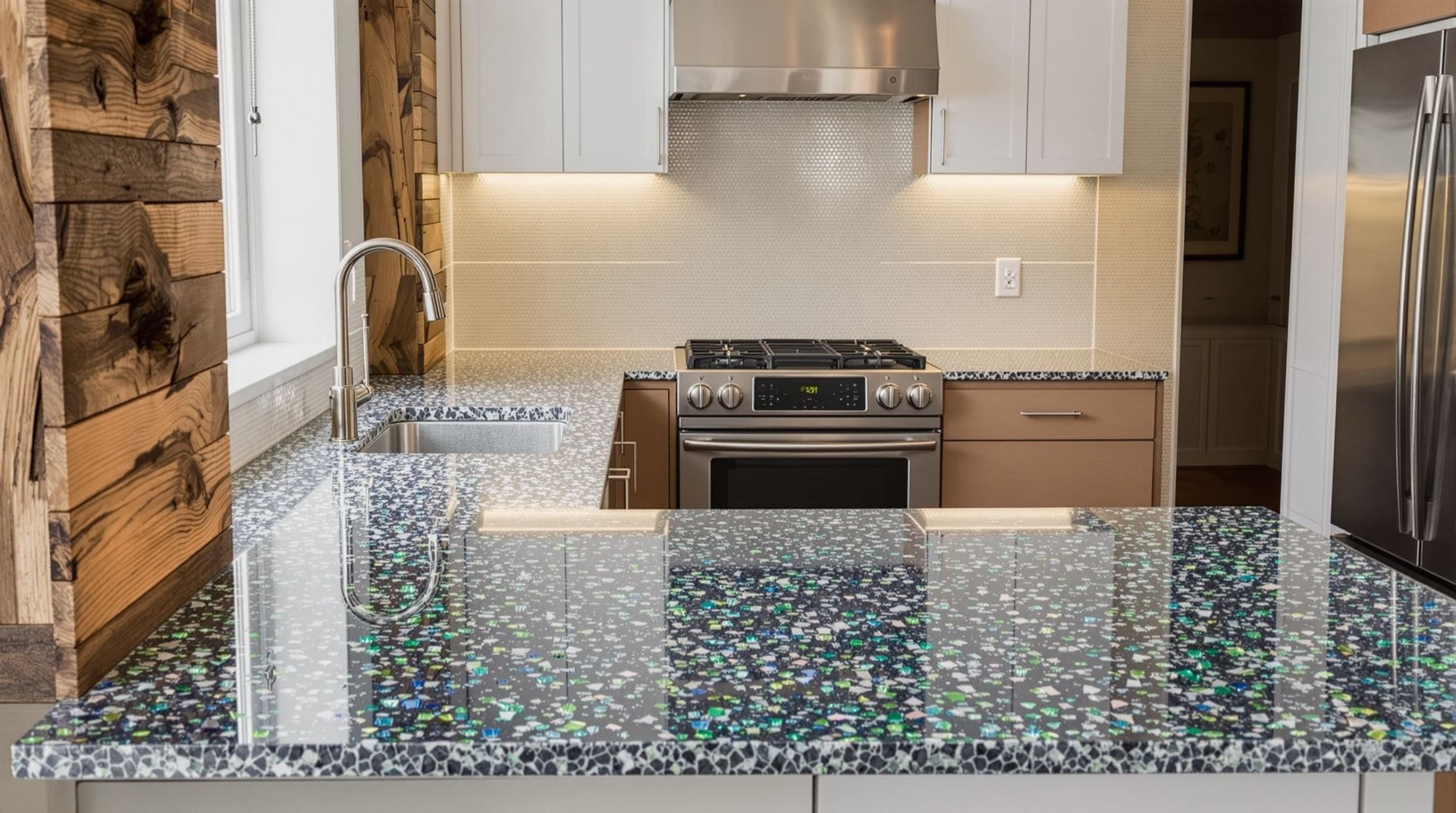
Recycled Glass Surfaces
Recycled glass countertops feature crushed glass set into a durable base. The result is a surface with subtle sparkle and individuality. It fits especially well in St. Charles homes where homeowners want something distinctive without being too trendy.
Bamboo and Butcher Block
If you prefer a soft, natural feel, bamboo and butcher block both work well.
- Bamboo grows quickly and is considered a renewable resource.
- Butcher block can be refinished and repaired, giving it a long and practical lifespan.
These materials work beautifully in kitchens where warmth and texture matter.
Sustainable Quartz and Thoughtful Manufacturing
Quartz remains a homeowner favorite because it is strong and low maintenance. Some quartz brands use recycled content or cleaner production methods. Asking about these details helps ensure your selection aligns with your sustainability goals.
With counters chosen, the next piece of the puzzle is the flooring underfoot.
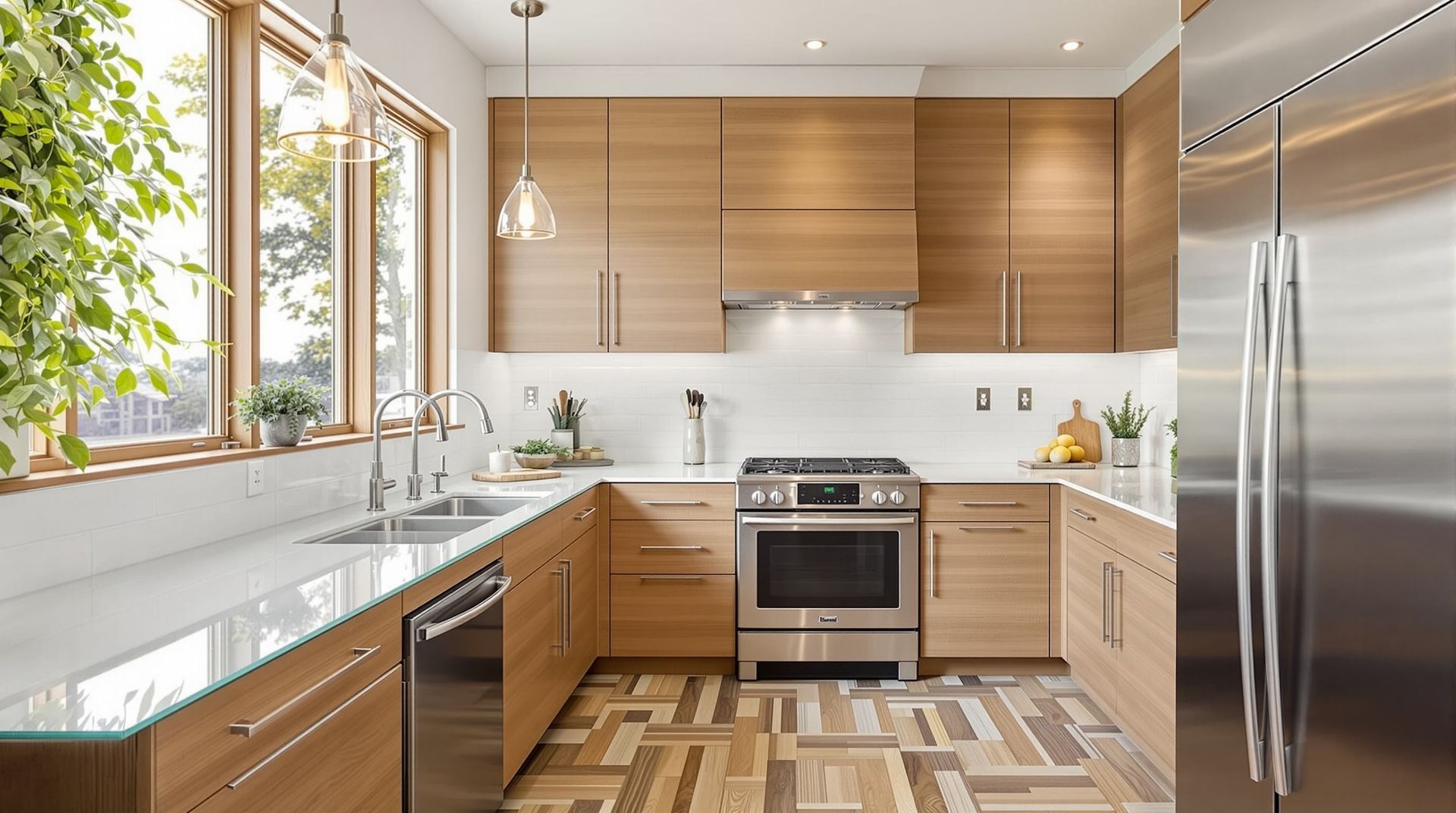
Eco-Friendly Flooring Choices for an Everyday Kitchen
Your flooring should feel good, look good, and hold up to the realities of everyday life.
Cork Flooring
Cork is harvested from bark that naturally regenerates, making it a renewable material. It has a comfortable feel underfoot and absorbs sound, which many families appreciate.
If you spend a lot of time cooking or moving around the kitchen, cork offers welcome comfort.
Bamboo Flooring
This is paragraph text. Click it or hit the Manage Text button to change the font, color, size, format, and more. To set up site-wide paragraph and title styles, go to Site Theme.
Bamboo flooring gives you the look of hardwood at a generally lower cost. It works well in both traditional and modern kitchens and comes in a range of tones. When choosing bamboo, it helps to check the hardness rating to ensure it meets your durability needs.
Recycled Tile or Porcelain
Tile is a classic choice for Midwest homes due to its durability during seasonal temperature changes. Recycled tile combines that practicality with environmental benefits. If your current tile is cracked or worn, this is a straightforward and sensible upgrade.
With the major surfaces set, finishing touches bring your kitchen to life.
Hardware, Lighting, and Finishing Touches
Once the big pieces are chosen, small details help complete the room. These choices may be minor on their own, but together they make a meaningful difference.
Recycled or Reclaimed Metals for Hardware
Hardware made from recycled or reclaimed metals offers a sturdy feel without relying on newly mined materials. This option fits well in kitchens that blend classic and updated elements.
LED Lighting and Energy Savings
Good lighting changes how your kitchen feels. LED fixtures provide bright, reliable light and use far less energy than traditional bulbs. If your current fixtures feel dim or outdated, an LED upgrade brings immediate improvement.
Water-Saving Fixtures
Modern faucets with reduced flow rates use less water without affecting performance. They look and operate just like standard fixtures, making them an easy and worthwhile choice.
With the details covered, the next step is figuring out how these choices work together for your home.
Making Sustainable Choices Work for Real Families
Every household uses their kitchen a little differently, especially when you’re trying to balance everyday routines with bigger kitchen remodeling plans. Thinking about how you cook, clean, and move through the space helps you zero in on materials that make life easier. Durable countertops, flooring that holds up to traffic, and cabinets with strong finishes all play a role in keeping the kitchen running smoothly.
Budget also shapes the choices most families make. Sustainable materials come in a wide range of prices, and many fit right alongside traditional options. Most St. Charles homeowners start with updates that make the biggest visual and functional impact, like cabinetry and countertops, then move toward flooring or lighting as the project progresses. Once you have a sense of what matters most to your daily routine, it becomes much easier to picture how everything will come together.
Bringing It All Together in Your St. Charles Kitchen
A sustainable kitchen does not mean replacing every material with an eco-friendly one. Instead, it is about finding the right combination that supports your lifestyle.
Many St. Charles homes already have layouts that work. When you pair that with renewable woods, durable surfaces, efficient lighting, and healthier finishes, you create a kitchen that feels comfortable, refreshed, and easy to enjoy. These decisions tend to last longer too, which reduces waste over time.
Seeing materials in person often helps clarify your direction. Cabinet samples, countertop textures, and flooring under natural light can help you make confident choices.
Conclusion
Choosing sustainable materials for your remodel should feel approachable, not overwhelming. With a little guidance, you can create a kitchen that feels good to live in, supports your routine, and reflects your style.
If you are beginning to plan, consider visiting a showroom or discussing your options with a designer. A quick conversation can help you narrow down which materials will make the biggest difference in your home.